Most of us are quite resilient but at times may experience stress in our lives or need assistance with challenging circumstances. Counselling is an active process that can help you to fully understand the difficulties and barriers you may be experiencing and find practical and effective strategies and solutions. If work stress has built into something more lasting, our article How to Recover From Burnout explains what recovery can look like.
Contact Us: 02 9981 3003

Counselling Sydney
What to Expect
Depending on your individual circumstances and needs, counselling may comprise of:
- Exploring beliefs, values and behaviours that may act as barriers to change.
- Developing effective coping strategies and solutions to ensure lasting behavioural and attitudinal changes.
- Providing insight and new perspective on current presenting issues.
- Facilitating psycho-education and skill development.
- Conducting clinical assessments and formulating a treatment plan.
- Liaising and referring to other allied health practitioners as required.
Therapeutic Methods
Our clinicians use a range of evidence-based intervention’s depending on the client and presenting issues:
- Cognitive Behavioural Therapy
- Trauma Focused Cognitive Behaviour Therapy
- Schema Therapy
- Mindfulness
- Acceptance and Commitment Therapy
- Dialectical Behavioural Therapy
- Motivational Interviewing
- Family Therapy
- Narrative Therapy
- Applied Behavioural Analyses
- Interpersonal Psychotherapy
- EMDR
Our Team
All Thinkahead clinicians are fully qualified, registered and highly experienced as well as accredited with Medicare and all major health funds. We provide both short and long term assistance and use elements of counselling, coaching and motivating skills to help you achieve your goals. All consultations are strictly confidential.
Our Expertise
Our team can help with:
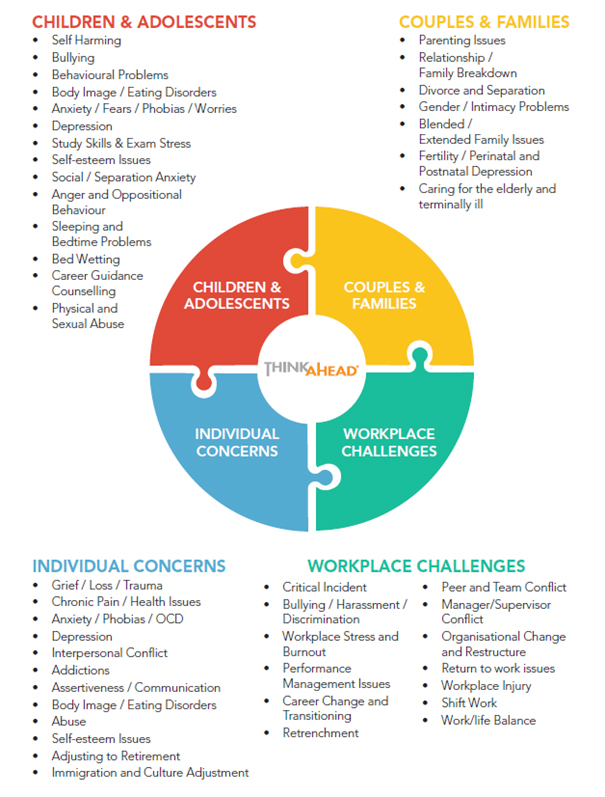
Frequently Asked Questions
What issues can counselling help with?
Counselling can help people navigate a wide range of personal, emotional, and life challenges. Counselling can support people experiencing: Anxiety, stress, and depression Grief and loss Relationship and family difficulties Workplace stress and burnout Life transitions and adjustment Low self-esteem and confidence Trauma and difficult life experiences Anger management and emotional regulation Parenting challenges Social or interpersonal difficulties Coping with illness, disability, or caring responsibilities Personal growth and self-development
Do I need a referal?
No. You do not need a referral to see a psychologist. You can contact us directly to make an appointment. However, if you wish to access counselling through a funded program, a referral or approval may be required. This may include: An Employee Assistance Program (EAP) Workers Compensation CTP (Compulsory Third Party) insurance NDIS (where counselling is included in your plan) Other government or third-party funded services If you are unsure whether you need a referral or are eligible for funding, our team can help you understand your options and guide you through the process.
What can I expect in a session?
Depending on your goals, sessions may focus on developing coping skills, improving relationships, managing stress or emotions, processing difficult experiences, or building confidence and resilience. Your counsellor may also introduce evidence-based techniques and provide strategies to practise between sessions to support your progress. Every session is tailored to you, and you are encouraged to work at a pace that feels comfortable and supportive. The aim is to help you feel heard, understood, and empowered to make positive changes in your life.
What is the difference between counselling and psychotherapy?
Both counselling and psychotherapy provide professional support for mental health and emotional wellbeing, but they often differ in their focus and depth. Counselling is generally shorter-term and focuses on helping you manage current challenges or specific life issues. It is often solution-focused and can help with concerns such as stress, anxiety, grief, relationship difficulties, workplace challenges, or life transitions. The goal is to develop practical strategies and improve coping skills. Psychotherapy is typically a longer-term process that explores deeper emotional patterns, past experiences, and the underlying causes of ongoing psychological difficulties. It aims to create lasting change by helping you better understand yourself, your relationships, and the way you think, feel, and behave. Psychotherapy may be beneficial for people experiencing long-standing emotional difficulties, trauma, personality-related concerns, or recurring mental health issues. In practice, there is often overlap between counselling and psychotherapy, and many clinicians use evidence-based approaches from both depending on your individual needs and goals.