- About
- Corporate Services
- Individuals & Families
- Our Approach
- Our Programs
- Resources
Contact Us: 02 9981 3003

ADHD Assessment Sydney

Attention Deficit Hyperactivity Disorder (ADHD) is a developmental disorder which affects over 1 million Australians. It is a biological, heritable condition, though it can also be influenced by environmental factors in early life.
The symptoms of ADHD can manifest in widely varying ways, though they are primarily grouped into 3 categories: inattention (the inability to maintain focus), hyperactivity (inappropriately overactive behaviour) and impulsivity (poor impulse control). ADHD patients can fall into one category, or be affected by all three.
Despite its prevalence, ADHD often goes underdiagnosed or mistreated, with patients often struggling to access the support or care they need. Both parents of children with ADHD symptoms and adults seeking assessment can face obstacles in securing a diagnostic referral.
How Might An Assessment Help You?
Whether you are an adult who has always noticed that your brain functions a little differently to your peers, or the parent of a child whom you suspect is displaying ADHD symptoms, getting assessed and diagnosed can be nothing short of life-changing.
There is no substitute for access to proper treatment and tailored professional help for sufferers of ADHD. Along with prescribing appropriate medications such as stimulants or non-stimulants (depending on how the patient presents), psychologists can also offer psychotherapy and other behavioural remedies.
The right treatment approach can help individuals to better understand their condition, develop strategies to improve daily functioning, and enhance long-term wellbeing across academic, work, and personal settings. For ADHD sufferers, getting assessed is often the first step towards an improved quality of life.
The Assessment Process
Adult Assessments:
An ADHD assessment is a collaborative and respectful process that focuses on understanding how your brain works across your whole life. It begins with an initial appointment where we talk through current experiences, challenges, strengths, and goals. We discuss areas such as childhood, education, work, relationships, and mental health, as ADHD is a lifelong neurodevelopmental difference.
The clinician uses a structured interview process as well as variety of questionnaires, which are completed by the individual and from someone who knows the individual well (such as a parent, partner, or close friend) to help build a full picture across different settings. The assessment also includes screening for co-occurring conditions like anxiety, depression, autism, or learning differences, to make sure any support recommendations are well-matched to your needs.
At the end of the process a feedback session is arranged where you receive feedback, a clear explanation of the findings, and recommendations for next steps, which may include strategies, therapy, accommodations, or medication options if appropriate.
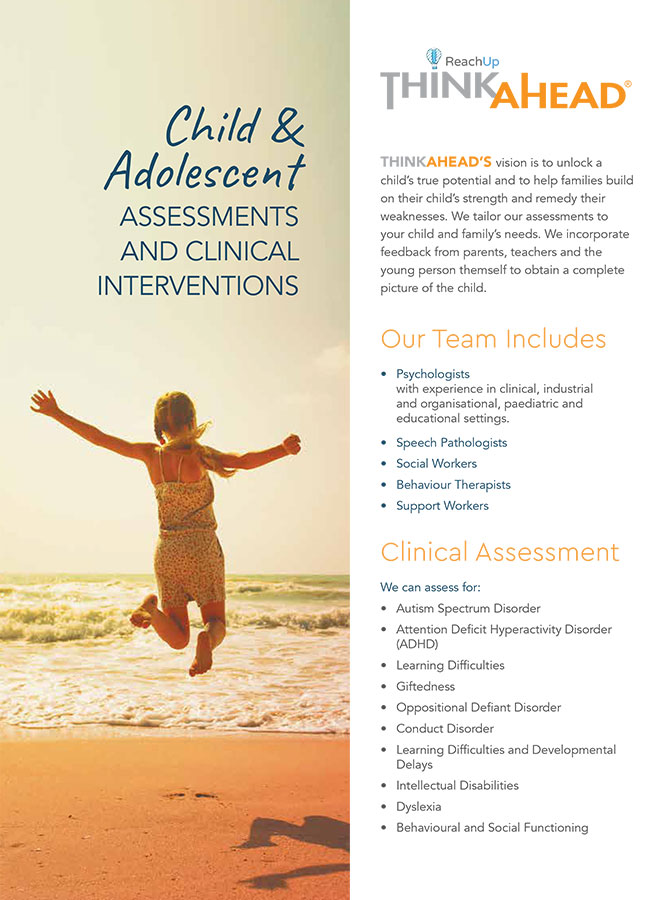
Child & Adolescent Process
An initial appointment is made with the parents where the clinician obtains a history regarding the parent’s pregnancy and birthing and the child’s early development, schooling background, social history and general behaviour. A separate appointment is made with the child where siblings are invited if age appropriate. During that appointment the child is given tasks to complete and family/sibling interactions and dynamics are observed.
A separate appointment ( 3rd appointment) is made where the child is assessed using several assessment batteries depending on the extent of the assessment ( ie Connors, WISC, WIAT…). The assessment will identify core issues of any cognitive, learning, social, emotional or behavioural issues.
The connors questionnaire is also completed by the parent and school teacher to help build a full picture across different settings.
At the completion of the assessment, results are analysed and a feedback session with the parents is arranged. In this session, the psychologist discusses the assessment results, identified needs and makes recommendations. A report can be provided to the referring (GP/Paediatrician) and school which outlines strategies for both strengths and weaknesses over the short and long term, as well as recommendations for interventions and referrals to allied health clinicians in our team if needed.
Where applicable, written feedback is also provided to the individual’s school, advising them of additional support.
Post Assessment
Thinkahead is an innovative, multidisciplinary service which is there to support you every step of the way. An end-to-end service, Thinkahead walks you through every step from assessment, to diagnosis feedback, medication management, and a range of therapeutic options. Contact our team of experts today to take the first steps on your mental health journey.

Counselling

Behaviour Support

Learning Support

Occupational Therapy
Frequently Asked Questions
What’s the difference between ADD and ADHD?
ADD and ADHD refer to the same condition, but the language has changed over time.
ADD (Attention-Deficit Disorder) is an older term that was used to describe people who primarily experience inattention without obvious hyperactivity. However, ADD is no longer a clinical diagnosis.
Today, clinicians use ADHD (Attention-Deficit/Hyperactivity Disorder) as the official diagnosis. ADHD includes three presentations:
- Predominantly inattentive presentation (what used to be called ADD)
- Predominantly hyperactive-impulsive presentation
- Combined presentation
This change reflects the understanding that ADHD doesn’t always involve visible hyperactivity — especially in adults, women, and neurodivergent people — and that attention, energy, and impulse differences can show up in many ways. So while people may still use the term ADD informally, ADHD is the correct and current term, and it better captures the full range of how the condition can present.
How is ADHD diagnosed?
ADHD is diagnosed through a comprehensive clinical assessment, not a single test or scan. The process usually involves:
- A detailed conversation about your current experiences, challenges, and strengths
- Exploring developmental history, including evidence that ADHD traits were present in childhood
- Questionnaires or structured interviews to understand how ADHD shows up across different settings (such as work, study, home, and relationships)
- Input from someone who knows the individual well (for example, a parent, partner, or teacher), where possible
- Screening for co-occurring conditions like anxiety, depression, autism, or learning differences
ADHD can be diagnosed by a psychiatrist, and in children often by a paediatrician as well as a psychologist and more recently GP.
Do I need a referral for an ADHD assessment?
In Australia, whether you need a referral for an ADHD assessment depends on who you see and your circumstances:
- Paediatricians (for children) and psychiatrists (for adults) usually require a referral from a GP,, especially if the appointment is to be rebated through Medicare.
- Psychologists can often be seen directly without a referral, though a GP referral may be needed for a Medicare rebate under a Mental Health Care Plan.
Even if a referral isn’t strictly required, seeing a GP first can be helpful. They can rule out other conditions, provide relevant history, and guide you to the right specialist.
How is ADHD treated?
ADHD treatment in Australia is individualised and often multimodal, meaning it combines approaches tailored to the person’s strengths, challenges, and goals.
1. Psychoeducation and strategies
Understanding ADHD helps individuals and families recognise strengths, reduce self-blame, and develop practical strategies for focus, organisation, and emotional regulation.
2. Behavioural and psychological therapies
- Cognitive Behavioural Therapy (CBT) supports managing procrastination, anxiety, and emotions.
- Coaching or skills training improves executive functioning, routines, and goal-setting.
3. Medication
- Stimulants (e.g., methylphenidate, lisdexamfetamine) improve attention, impulse control, and hyperactivity.
- Non-stimulants may be used if stimulants aren’t suitable.
Medication is prescribed and monitored by a psychiatrist or paediatrician.
4. Allied health supports
- Occupational therapy (OT): Supports sensory processing, routines, and executive functioning.
- Speech therapy: Helps with communication, social skills, and working memory.
- Learning support: Assists with study and organisation,
5. Environmental adjustments
Changes at school, university, or work — such as structured routines, task breakdowns, or extra time — can make daily life more manageable.
The most effective treatment is holistic and personalised, combining strategies, therapy, medication, and supportive adjustments to help people manage challenges, harness strengths, and improve overall wellbeing.
ADHD can be diagnosed by a psychiatrist, and in children often by a paediatrician as well as a psychologist and more recently GP.